
In August, RBI allowed 11 business houses to start a payments bank.

Corporate India is more dependent than before on exporters of IT services such as Tata Consultancy Services (TCS), Infosys, and Wipro for earning foreign exchange. Such companies account for nearly 43 per cent of the forex revenues of listed firms, up from 22 per cent a decade ago. The listed IT services companies earned nearly Rs 4.2 trillion through exports in FY22, up 15 per cent from the Rs 3.65 trillion a year earlier. In comparison, the forex revenues or exports of the rest of the BSE500 companies were down 11.9 per cent to Rs 5.6 trillion last financial year.

'We started affordable housing loans that has good traction and the books have grown to Rs 750 crore as of the end of last quarter.'

Adani Enterprises' proposed Rs 20,000 crore (Rs 200 billion) fundraising via fresh issue of equity shares through a public offer would be the fourth biggest by Indian companies, excluding banks and non-banking financial companies.

The FM he said non-performing assets of PSBs have come down by Rs 1 lakh crore.

'We emphasise the importance of not basing investment decisions solely on electoral outcomes.' 'Instead, focusing on investing in high-quality businesses capable of prospering regardless of the political landscape is paramount.'

The earnings are, however, expected to be down around 2 per cent on a sequential basis due to pent-up demand getting exhausted and the adverse impact of rising metals and energy prices on consumer goods and manufacturing companies.

Longer-tenure FDs generally give higher returns. Nonetheless, going for a tenure higher than two to three years is not advisable.

IDBI Bank had to sell its MF arm after being acquired by state-owned insurance behemoth Life Insurance Corporation since LIC already had an AMC.

India's largest PSU bank, State Bank of India, delivered excellent results, once the impact of a big jump in employee expenses was adjusted for. The net interest income (NII) beat the Street due to a better net interest margin (NIM) and good loan growth. The credit growth at 5.2 per cent quarter-on-quarter (Q-o-Q) (15 per cent year on year) was excellent for a large bank.

The finance minister, in her Budget speech, should focus more on what she is directly responsible for, rather than on programmes where her role is largely supportive, notes Nitin Desai.
.jpg)
The first phase would comprise universal access to banking facilities. Under this, basic bank accounts with zero balance, RuPay debit card and financial literacy, will have to be completed in the next one year, officials said.

Gold prices hit record high in the third week of March as fears of bank collapses and high inflation led investors to the traditional safe haven. Gold prices are often inversely correlated to dollar strength because the international price is dollar-denominated. The Federal Reserve's (Fed's) stance indicates that the dollar may appreciate further since it is prepared to keep pushing up policy rates. But demand for gold is also up - the World Gold Council claims central banks are buying in addition to private demand.

Shareholders of industry giants Adani Enterprises, Reliance Industries, and Tata Motors - the latter two are part of the Sensex - will decide on combined related-party transactions of more than Rs 2.68 trillion proposed for this financial year and later. Related-party transactions for BSE 500 companies touched at least a six-year high of Rs 42.1 trillion in FY23, the Capitaline data shows. The Rs 42.1 trillion includes related-party transactions both at balance-sheet and profit-and-loss levels.

Days after Moody's cut its gross domestic product (GDP) forecast for financial year 2022-23 (FY23) after the official GDP print for the June quarter came in lower than expectations, the global ratings agency said it would maintain its long-term sovereign debt credit rating and outlook on Asia's third-largest economy. "The credit profile of India reflects key strengths, including its large and diversified economy with high growth potential, a relatively strong external position, and a stable domestic financing base for government debt," Moody's said on Tuesday. "We do not expect rising challenges to the global economy, including the impact of the Russia-Ukraine military conflict, higher inflation, and the tightening financial conditions on the back of policy tightening, to derail India's ongoing recovery from the pandemic in 2022 and 2023," it said.

After swinging nearly 330 points, BSE Sensex finished 172.69 points or 0.43 per cent higher at 40,412.57. Similarly, the 50-scrip NSE Nifty appreciated 53.35 points or 0.45 per cent to close at 11,910.15.

The Reserve Bank of India has issued several warnings that the public should not fall prey to such unscrupulous activities and verify the companies offering loans online and through apps.

The stocks are largely from sectors such as chemicals, finance and cement, which struggled earlier but the worse seems to be behind them.

The asset quality of non-banking financial companies (NBFCs) deteriorated in April-September 2021 (H1FY22) owing to the second wave of the pandemic. Their gross non-performing assets (NPAs) rose to 6.8 per cent in September 2021 from 6 per cent in March 2021. The Reserve Bank of India's (RBI's) annual Trend and Progress report (FY21) said the sector might have to grapple with higher delinquencies as and when policy measures unwound. The pandemic posed significant challenges to NBFCs during the first wave (2020) also.

Understand the pros and cons of SGBs before rushing to invest in them based on past returns.

'Try to obtain a secured personal loan or credit card by offering some collateral, such as a fixed deposit or gold.' 'Not only will this improve your eligibility, but the lender may even offer a lower interest rate.'

At the heart of Paytm's slide lies the abject failure of its Super App strategy, notes Indrajit Gupta.

India Inc reported an uptick in revenue growth in the January-March quarter (Q4) of 2023-24 (FY24), but it came at the cost of a deceleration in earnings growth.

The headline for corporate profit growth has been very encouraging in the July-September quarter (Q2) of 2023-24 (FY24), with the combined net profit of listed companies up by 38 per cent year-on-year. However, the earnings distribution has been very lopsided, with most of the growth coming from public-sector oil-marketing companies (OMCs), banks, non-bank lenders, automobile (auto) companies, and cement producers. By comparison, companies from information technology services, fast-moving consumer goods (FMCG), retail, and consumer durables were disappointed, experiencing a sharp slowdown in net sales growth and a relatively muted increase in reported net profit.

MMFS is looking at a compounded annual growth rate (CAGR) of 18 per cent in assets under management (AUM) during FY23 to FY26 on the back of the strong recovery. The company has initiated risk-mitigating initiatives, including diversification into non-vehicle loans, building digital capacity and re-classification of customer profiles into affluent and mass-affluent in semi-urban segments to better target marketing.

We must stop stigmatising business failures. Particularly when startups are mushrooming all around, the financial system, backed by the RBI and the government, can explore ways of extending support to restart the journey of a failed entrepreneur by finance as well as counselling, recommends Tamal Bandyopadhyay.

India has a huge untapped population which doesn't have facilities for financial aid and insurance, and it is perhaps plausible to look at the option of having niche players catering to smaller sectors akin to non-banks and microfinance institutions in lending, said Rakesh Joshi, member (Finance & Investment), Insurance Regulatory and Development Authority of India (Irdai). Speaking at the Business Standard BFSI Insight Summit, Joshi said, "Today, most of our insurance companies operate at a national level. There is arguably a case for having differentiated operations, which cater to niche sectors the same way we have non-banking financial companies (NBFC) and microfinance institutions in lending." "The capital requirement for niche players may not be as large as those having national ambitions. "Enabling these niche players, which require lower capital, will enhance the penetration in areas which hitherto had not seen traction from large players," he said.

10 largecaps stocks which stand to gain from the Budget.

'The market has picked up for commercial vehicles. We are very close to pre-pandemic levels.'

A strong business update for the April-June quarter of the 2023-24 financial year Q1FY24 has led to a big jump of over 7 per cent in the share price of Bajaj Finance on Tuesday (July 4). The non-banking financial company's (NBFC's) new loan book grew 34 per cent with 9.9 million new loans booked in Q1FY24 from 7.2 million loans booked in Q1FY23. The company's total customer franchise rose to 72.98 million (as on June 30, 2023), compared to 60.30 million year-on-year (YoY) with the highest-ever quarterly increase of 3.84 million in Q1FY24. Assets under management (AUM) grew by 32 per cent to about Rs. 270,050 crore in Q1FY24 from Rs. 204,018 crore in Q1FY23.

"7.75 per cent savings bonds scheme notified. Would replace 8 per cent scheme. Will be effective from 10th January. This sequenced notifications and gap of a week was necessary to avoid overlap in cheques realisations," Economic Affairs Secretary S C Garg said in a tweet.

Despite Sebi passing at least four orders against deposit-taking entities in the past year alone, the business seems unscathed

The second quarter results of banks show that net profits for the industry increased 57 per cent annually. The private sector banks recorded a 64 per cent rise in profits, whereas the net profits of public sector banks jumped 50 per cent in this period. A significant portion of this increase can be attributed to the rise in credit costs and a decline in non-performing assets (NPAs).

In view of the economic shock caused by the COVID-19 pandemic, Reserve Bank of India (RBI) on Friday asked scheduled commercial banks and co-operative banks not to make any dividends for the financial year ended March 2020. In view of the ongoing stress and the heightened uncertainty on account of the pandemic, RBI said it is imperative that banks continue to conserve capital to support the economy and absorb losses, if any. The decision is based on review of the September quarter financial performance of banks.

Prices of food items like cereals, pulses, and edible oils rose or remained steady in May, a Reserve Bank of India (RBI) report said, indicating there could be another higher inflation print. However, it observed that the Monetary Policy Committee's (MPC's) surprise move to increase interest rates bodes well for its credibility. The RBI's monthly State of the Economy report, released on Tuesday, citing high frequency food price data from the Ministry of Consumer Affairs for the period May 1-12, said the increase in the prices of cereals was primarily because of the surge in wheat prices.
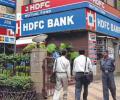
The Reserve Bank of India is likely to take a call on the relaxations sought by HDFC Bank in relation to the merger, as the date of merger draws closer, sources said. The HDFC twins, which announced their decision to merge in April last year, received National Company Law Tribunal's (NCLT's) approval recently - a key milestone to close the deal in due time. The management of both the entities had said that it will take 15-18 months for the merger.

Even today, many MFIs already distribute pension and micro insurance products to low-income households.

While rising interest rates and tighter liquidity are giving negative signals for the financial sector, increasing economic activity could mean higher business volumes for lenders. Liquidity in the banking system has moved from Rs 8 trillion surplus into a deficit of Rs 33,000 crore over the 2022 calendar year. By the end of November, bank credit had grown 17.5 per cent YoY (year-on-year).

As many as 75 million households that do not have access to banking services will be covered and at least one bank account opened for each household, against the earlier proposal of two.

For over a decade, HDFC Bank consistently outperformed industry growth rates in both deposits and advances, maintaining impeccable asset quality. Amid a landscape where other banks struggled with soaring non-performing assets (NPAs), HDFC Bank thrived, eventually surpassing ICICI Bank to become the largest private sector lender in India. Its net interest margin (NIM) remained stable in the range of 4.1-4.4 per cent.
